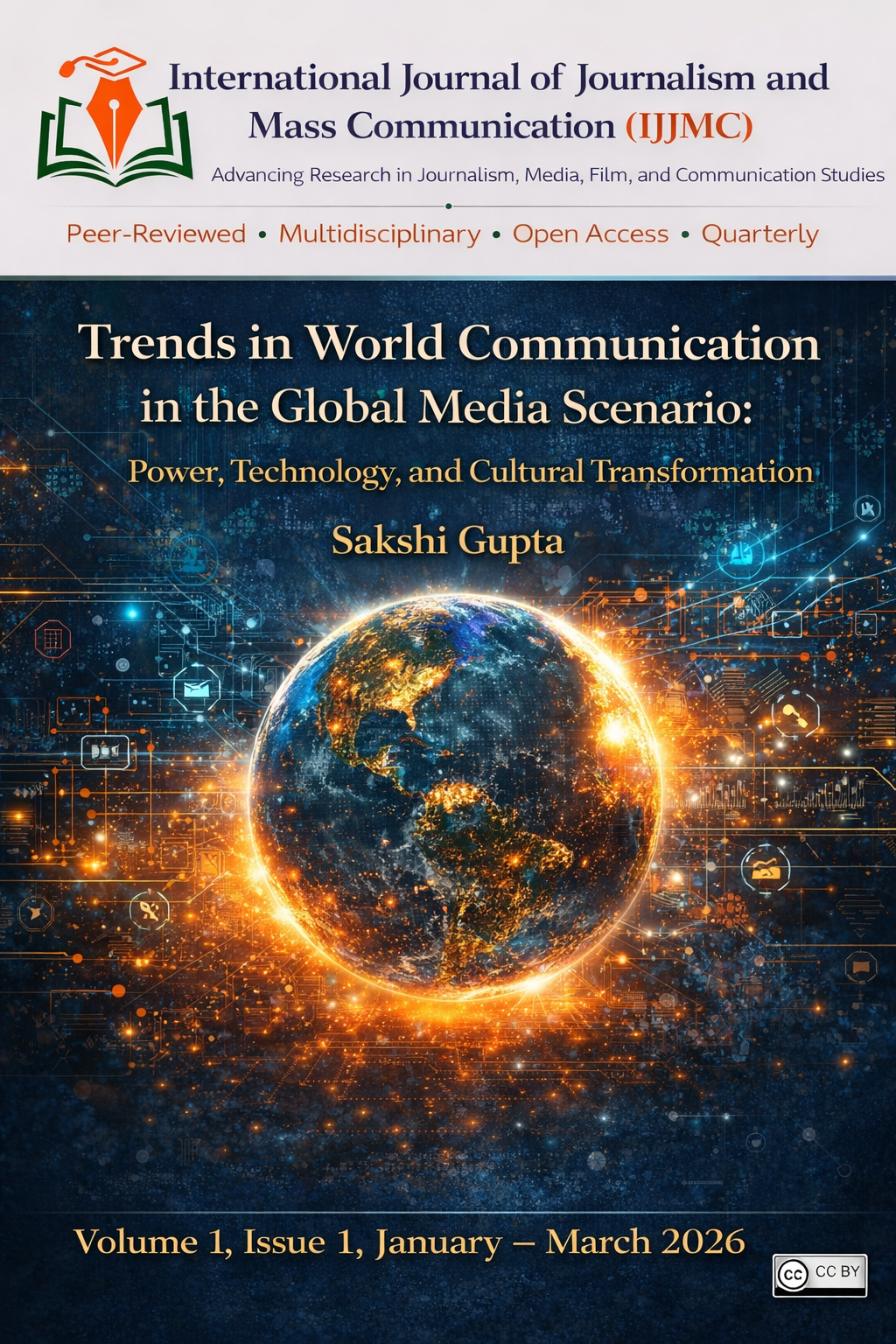
Trends in World Communication in the Global Media Scenario: Power, Technology, and Cultural Transformation
DOI:
https://doi.org/10.5281/zenodo.19314545Keywords:
Global Media, Global Media Scenario, Journalism, TechnologyAbstract
The global media has essentially restructured the face of communication in the world making it a multidimensional, transnational, and technology-driven process. The current communication systems are more and more crossing the territorial viewpoints and working by means of net integrations of digital platforms, media organizations, and cultural interactions. This paper is a critical reflection on the prevalent tendencies defining the world communication in the global media context in terms of global media by synthesizing the global communication studies perspective, political economy of media, cultural studies and international relations perspectives. Some of the main tasks examined in the paper include digitalization, media convergence, globalization and glocalization of media content, media ownership concentration, algorithmic governance, misinformation, and communication inequalities that persist. Based on the literature on world politics, the paper also illustrates the fact that global communication determines power relations, identity building, political engagement, and soft power processes. The results indicate that despite digital communications technologies increasing the worldwide connectivity and the possibilities of participation, it also increased the structural inequalities, cultural asymmetries, and regulatory issues. The paper ends by stating that multidirectional, inclusive and ethical communications structures are needed to facilitate media literacy, cultural diversity, and democracy in a more and more globalised media landscape.
Downloads
References
Downloads
Published
Versions
- 2026-03-30 (2)
- 2026-03-30 (1)